

Now that I have been purchasing Easter eggs this week, I have been considering the health benefits of various types of chocolate. Many believe that dark chocolate is the least bad option because of its flavanols, which are supposed to be good for your heart, and its lower sugar content. Nutritionists go further – some say you should finish a meal by eating a couple of squares of dark chocolate – not quite the modern equivalent of a cigarette.
Earliest hints of health benefits
In the 1990s, researchers discovered that the local inhabitants of Panama, known as the Kuna, were immune to the age-related increase in blood pressure that leads to heart disease. The natives consume five cups of cocoa each day. This triggered a wave of scientific examination into the chemicals found in cocoa, a lot of which received funding from the chocolate industry for clear and evident reasons. Scientists widely believed that the beneficial effects arise from flavanols, a very large family of chemicals present in cocoa and numerous other plants, such as tea, apples, berries.
Flavanols
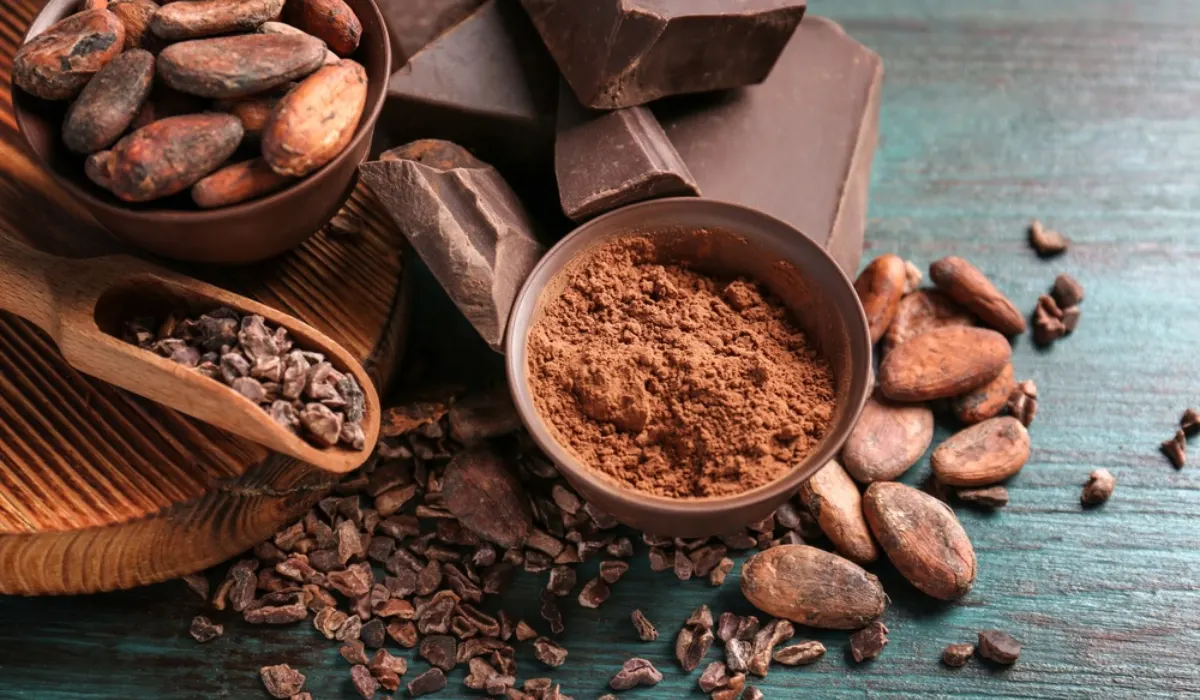
What is known about flavanols? Researchers initially thought that flavanols benefit health because they belong to a much larger group of compounds known as antioxidants (which may help protect cells from ageing-related damage - although experts still consider the significance of antioxidants in the diet).
Laboratory experiments conducted on cells suggest that flavanols produce other effects on the heart as they both decrease blood clot formation and cause blood vessels to relax, which in turn leads to a decrease in blood pressure.
This pattern was seemingly reflected in population studies conducted in Western populations, which reported that individuals who consumed higher amounts of flavanol-containing plants and various plant foods experienced lower incidences of heart disease.
Evidence of benefit crumbles
It was a tempting hypothesis: how could it be that a tasty treat, usually portrayed as health-damaging, would actually turn out to be healthy? Sadly, on investigation the evidence seems to melt away - just like chocolate that's been left on the shelf in your cupboard for too long (though it doesn't happen that often in my house). One of the first problems is that the health claims were generally based on a high level of the finest kind of evidence, the randomised trial.
For example, if the trials were looking to see if concentration was improved by chocolate for example, it would need to be checked that people were still functioning normally when they got it - there are some concerns about how the ingredients might make you a little sleepy. Current research on cells in the laboratory will not necessarily translate into the real world either.
And population studies can be biased because currently those who eat more fruit and veg - or dark chocolate - tend to be a bit more well off than average, said by Dr Mohammad Talaei, a health researcher at Queen Mary University of London. "There are biases with regard to chocolate research," he said.
Little meaningful difference in sugar

The other main claim for dark chocolate, that it contains less sugar, isn't always true. Several types of dark chocolate, such as Bournville, contain slightly more sugar than equivalent-sized milk chocolates like Dairy Milk. If your dark chocolate lacks high quality, you may find sugar as the main ingredient. Lindt with 70% cocoa content has 29g of sugar per 100g, while Lindt's milk range has 55g. Eating the supposed two squares of chocolate commonly regarded as a healthy treat after a meal, however, makes this sugar content difference negligible.
If we estimate two squares to be around 12g of chocolate, the Lindt bar has 3.5g of sugar, and the milk chocolate bar has 6.6g. Some high cocoa content chocolates, like Montezuma's Absolute Black - 100% Cocoa, contain less than 0.1g of sugar in 12g. Thus, consuming two squares of high cocoa content chocolate provides about one teaspoon less sugar than two squares of milk chocolate. Considering the average person consumes between 70 and 90g of sugar daily (around 23 teaspoons), this difference seems minor, though some may disagree. Bridget Benelam, a British Nutrition Foundation scientist, said, "If choosing dark chocolate helps you have a bit less sugar in your diet, that's probably a good thing."
Training ourselves to slow down
"It could even be another advantage of dark chocolate," Mellor said, who has extensively researched chocolate and serves as the external spokesperson for the British Dietetic Association. "You might be able to eat it more slowly because it's not as sweet and has more flavour – and then it may be easier to stick to just two squares," he added. "Dark chocolate tends to be more satiating because you actually eat it more slowly. My tip is to slow down so that you can truly feel it melting in your mouth. Then, you will experience the creaminess, and if it's dark chocolate, you will also enjoy the depth of flavour at the back of your mouth. If we can train ourselves to slow down, then we can enjoy chocolate more and maybe eat less.
FAQ's
Q: Is dark chocolate actually good for you?
A: It depends on the amount and type. While it contains antioxidants from cocoa, most commercial bars are also high in sugar and calories, meaning the health benefits are often outweighed by the drawbacks.
Q: Does dark chocolate lower blood pressure?
A: Only slightly and temporarily. The flavanols in cocoa can help dilate blood vessels, but you would need to eat unfeasibly large amounts of chocolate to see any real medical benefit—ingesting far too much sugar and fat in the process.
Q: Are all dark chocolates created equal?
A: No. Look for percentages of 70% cocoa or higher and check the ingredient list to ensure sugar is not listed as the first or primary ingredient.
Q: Can I eat dark chocolate for weight loss?
A: No, dark chocolate is a calorie-dense food. Eating it regularly without cutting calories elsewhere will likely lead to weight gain rather than weight loss.
.