It's an obvious piece of Western budgeting advice - cook at home and your finances will benefit. But in numerous countries in Asia, Africa and Latin America, they reverse the equation; cooking at home is a treat, eating out is a bargain, owing to fewer overheads, less regulation and frenzied competition, among others.
Why eating out is more expensive in wealthy countries
Higher restaurant costs the restaurants of the wealthy world incur enormous rent, salary, and utility overheads; rigorous regulations and high compliance; all of this drives their menu costs to multiple times that of the ingredients, particularly when the drinks are accounted for. Franchise restaurants are now more commonplace, and such operations have not only their own franchise costs to recoup, but they have to advertise.
Also, broad menu offers at the restaurant lead to the inevitable waste of food. However, when you compare this to the scale of operation of a supermarket, which has large volume and a highly competitive environment leading to thin margins, the grocery goods stay at low cost.
Why eating out can be cheaper in developing countries
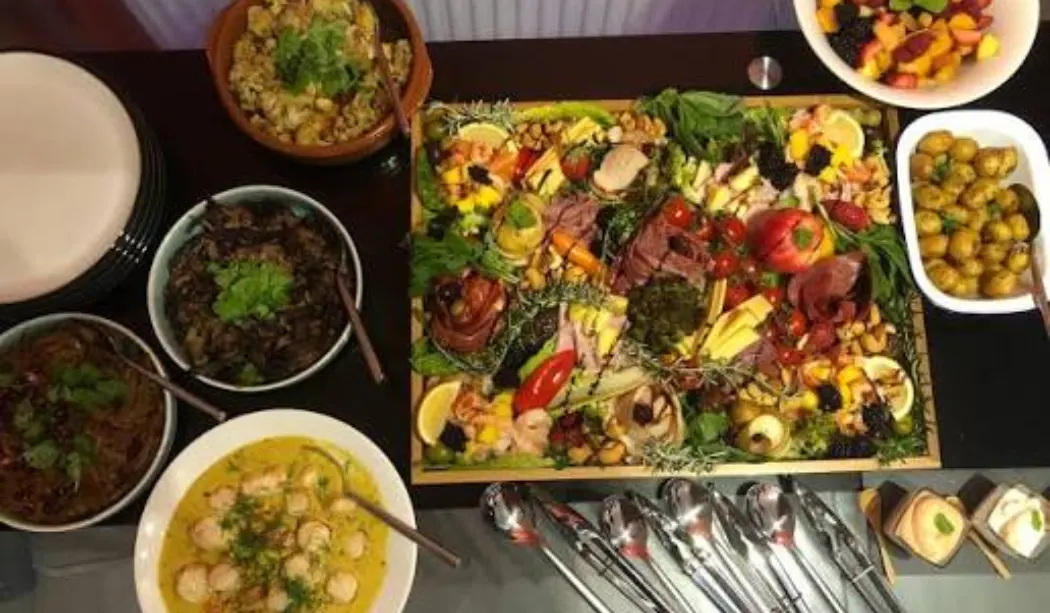
The numerous cheap street food providers and independent low-cost restaurants found throughout the developing countries have fewer restrictions and lower cost of operation to cover; this applies from rental to wages as well as many of them bulk buying ingredients and specialising in a select few low-impact or low-resource recipes that make small profits with close to nil margin waste.
Since the way life has been, all other shop people find in their respective cities is another shop at the beck and call of hungry people and the costs on food do go down due to the ever growing competition. The prices in contrast go much higher up on everyday products such as vegetables or fruits if your house lacks appropriate refrigeration facilities and a sustainable form of cheap energy to warm a meal.
Thailand
As eating out is cheaper, builders construct Thai townhouses with either tiny kitchen space or no kitchen space at all. While many locals see 'international' fast food chains as costly. Street food vendors and cheap neighborhood restaurants charge for items such as pad thai just as little as $0.30 (22p) and much cheaper than you could buy raw food from the stores. The supermarkets have a ridiculously inflated pricing structure, whereas buying locally at street markets can also be more expensive for homes, due to purchasing food from vendors in very small amounts, whereas vendors buy in bulk from wholesalers.
Taiwan
It’s true! In a recent statistic – Taiwan actually eats out more than any other country. People are selling homes in the country today without kitchens and you may not see another living soul who has ever turned on a stove at least for months on end! Cheap bentos boxes, noodle vendors and night market stools provide 3 square meals to individuals on a daily basis with good turnover to retain prices at a minimum amount. It logically doesn’t make sense to cook at the relatively pricey grocery stores so let’s go out for breakfast, lunch and dinner.
Philippines
Throughout the Philippines, people don’t make typical meals in home kitchens but eat them at the ubiquitous roadside carinderias. An ulam – or main dish – may start at just US$0.17, undermining the logic of preparing it at home. Restaurants mass-cook classic dishes and dish out set portions cafeteria-style to minimize prices while affordable labor and affordable staples of fish and rice can make meal costs even cheaper for a meal for the solo customer than in their own home.
Indonesia
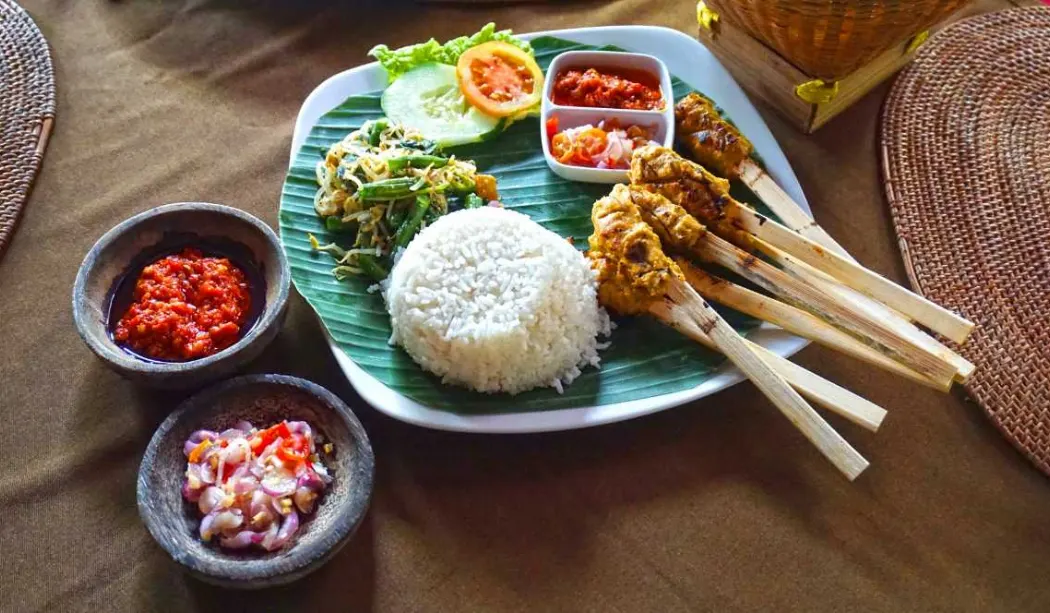
Cheap, everyday eats are bought by Indonesians from warungs - tiny, family-owned restaurants - that pop up on practically every street corner. In order to keep costs down, the food will even be prepared by a warung on the front porch of their home. Even a plate of fried rice (nasi goreng), chicken, or plain rice with vegetables could only set you back about $1 (RM3), which might even be cheaper than cooking at home! With next-to-none rent to be paid out of the business to staff, who all hail from the same family, full plates are cooked by warung owners that are found hard to match by local households on their own.
India
Plate up – Street Food in India The price for many plate's of cheap canteens and street foods across India costs less than what some would pay to prepare the dish in their own homes! When vendors cook the same dishes throughout the day, buying from cheap wholesale shops keeps prices fantastically low! So for instance, to get a full meal with Raita, Dal, Roti—the list goes on—for a full Indian feast, including a family of five Americans living in Kolkata, a meal costs less than $3/£2.20 each.
FAQ's
Q1. Why do major brands release weird limited-edition food flavors?
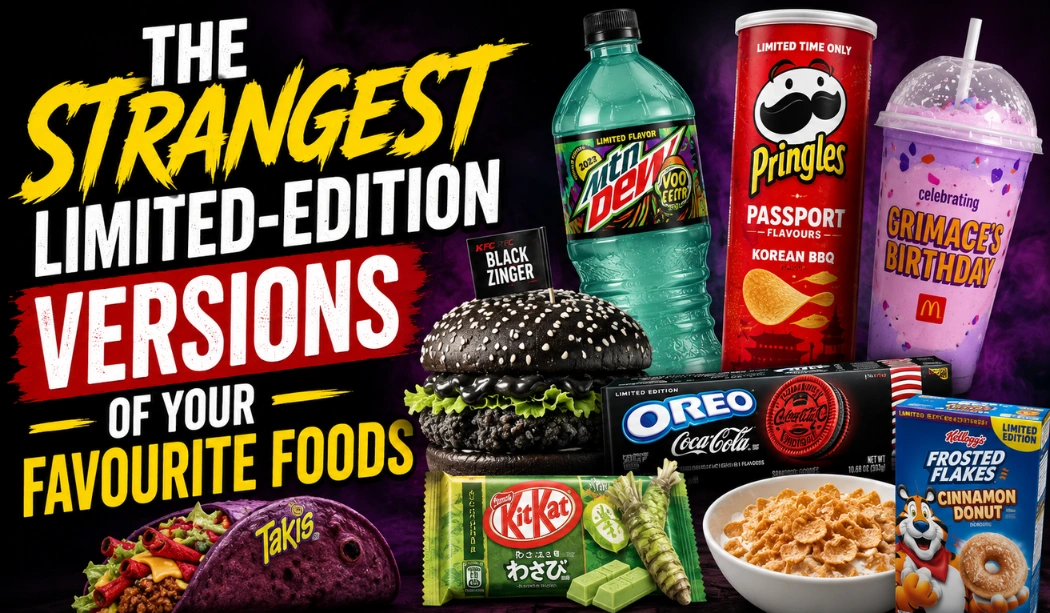
A: Brands primarily use bizarre limited-edition drops (like pickle-flavored sodas or savory mayonnaise pastries) as a marketing strategy to generate viral social media buzz, create collector hype, and temporarily capture consumer attention in a crowded market.
Q2. Are these strange limited-edition foods actually meant to taste good?
A: It varies. Some are genuinely delicious culinary experiments (like sweet-and-salty crossovers), while others are intentional novelty gag items—such as holiday candy canes flavored like mud or shellfish—created strictly for shock value or seasonal laughs.
Q3. What are some of the most famous examples of unusual food crossovers?
A: Notable examples include Heinz releasing unusual condiment hybrids (like tomato ketchup smoothies or hot cross bun mayo), fast-food chains offering pickle-flavored slushies, and snack giants rolling out regional variations like wasabi or cucumber-flavored treats.
Q4. Do any limited-edition weird foods ever become permanent items?
A: Rarely, but it happens. If a bizarre flavor or unexpected brand collaboration receives overwhelming positive public demand and record-breaking sales during its trial run, the manufacturer may bring it back as a permanent fixture.
Q5. Where can people find or buy these rare novelty snacks?
A: Most of these items are sold exclusively through specific online specialty importers, brand-sponsored pop-up shops, or major grocery store chains for a strictly limited window before disappearing from shelves permanently.
.